
Step Back in Time: The Allure of the 1960s Diner
There’s something undeniably captivating about a 1960s diner. The vibrant colors, the chrome accents, the unmistakable aroma of coffee and comfort food – it all conjures a sense of nostalgia and simpler times. These iconic establishments weren’t just places to eat; they were social hubs, meeting spots, and cultural touchstones that defined an era. From the checkered floors to the spinning bar stools, every detail contributed to a unique and memorable experience.
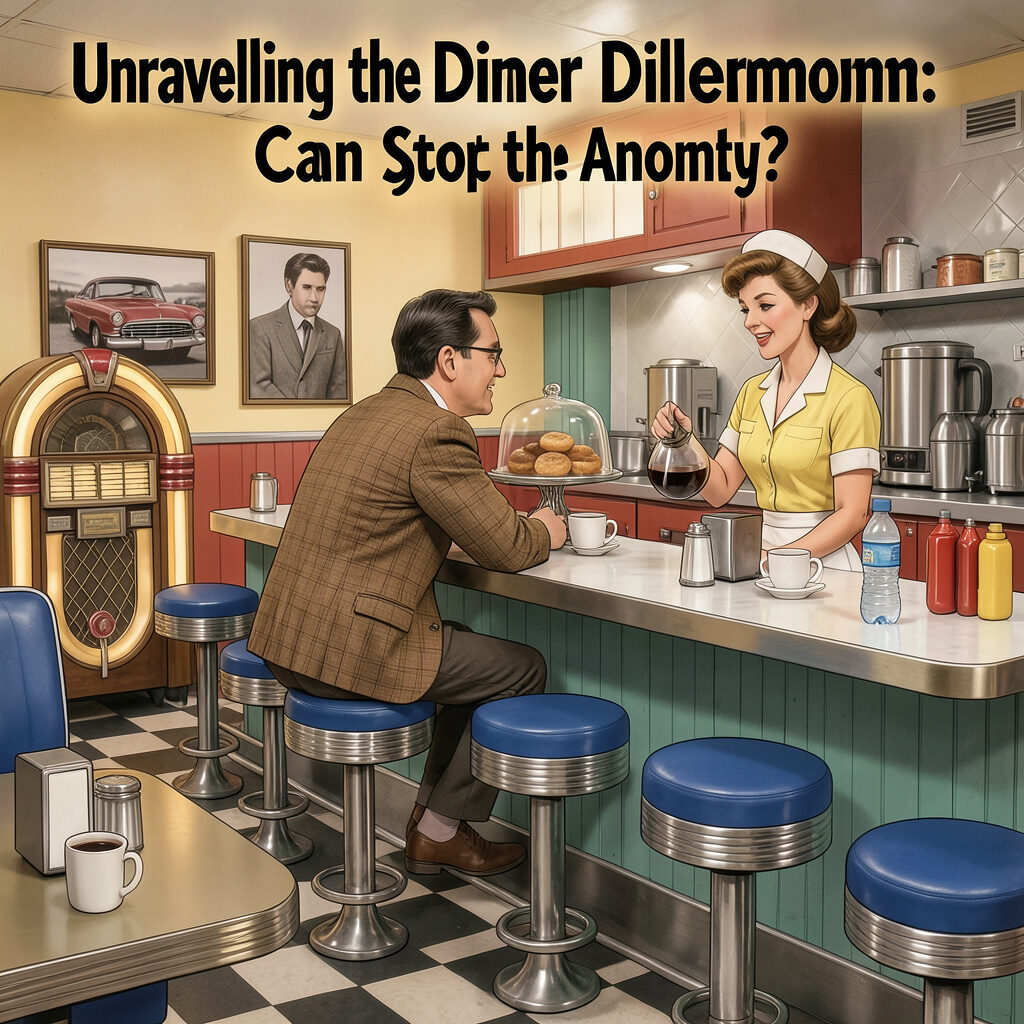
Our featured illustration perfectly captures this timeless ambiance. We see a cozy diner interior, bustling with quiet activity. A gentleman in a classic brown plaid jacket sits comfortably at the counter on a bright blue stool, perhaps enjoying a morning coffee or a quick bite. Behind the counter, a friendly waitress, dressed in her signature yellow shirt, white apron, and cap, is diligently serving him, pouring fresh coffee into his mug. The scene is rich with details that transport us straight into the heart of the 1960s.
A Closer Look at the Diner Details
As you scan the illustration, your eyes are drawn to the myriad of period-appropriate elements that bring the scene to life:
- The Countertop: Adorned with essential diner accoutrements – classic coffee mugs, salt and pepper shakers, and the familiar duo of ketchup and mustard bottles. A glass dome cover proudly displays a selection of tempting donuts, ready for a customer’s indulgence.
- Seating: The bar stools, with their gleaming chrome bases and plush blue seats, are quintessential diner fixtures, designed for both comfort and style.
- The Jukebox: A magnificent old-fashioned jukebox stands proudly in the corner, its vibrant colors and intricate design hinting at the rock and roll tunes that once filled the air. It’s a symbol of the era’s music and entertainment.
- Decor: The walls are decorated with framed pictures, one showcasing a classic car, another a distinguished-looking man, adding to the authentic retro feel.
- Flooring: The classic black and white checkered floor tiles are instantly recognizable, a hallmark of diner design that adds a playful yet sophisticated touch.
- Background Elements: Cabinets and shelves in the background are neatly arranged, holding various diner supplies, contributing to the functional charm of the space.
Every element, from the waitress’s uniform to the customer’s attire, seems perfectly placed to reflect the 1960s aesthetic. This meticulous attention to detail is what makes such illustrations so immersive and enjoyable.
The Challenge: Spot the Modern Anomaly
While the illustration is a masterclass in retro depiction, it presents a fun challenge for the observant viewer. The question posed is simple: Can you spot what’s wrong in this 1960s diner? This isn’t just about admiring the art; it’s about engaging with it on a deeper level, scrutinizing each detail to find the one element that doesn’t quite fit the historical context.
This type of visual puzzle is more than just a game; it hones your observational skills and encourages a critical eye. In a world saturated with information and imagery, the ability to quickly identify discrepancies or anomalies can be incredibly useful, whether you’re proofreading a document, noticing a change in your environment, or even analyzing data. It trains your brain to look beyond the obvious and delve into the nuances.
Why Such Puzzles Are Engaging
Puzzles like “spot the difference” or “find the anomaly” are popular for several reasons:
- Cognitive Engagement: They stimulate your brain, improving focus, attention to detail, and pattern recognition.
- Sense of Achievement: Successfully identifying the hidden item provides a satisfying sense of accomplishment.
- Historical Context: In this case, the puzzle also serves as a subtle lesson in historical accuracy, prompting you to consider what items belong to a specific era and which do not.
- Relaxation: For many, these visual challenges offer a pleasant and relaxing way to unwind while still keeping the mind active.
The Answer Revealed (Spoiler Alert!)
If you’ve been searching diligently, you might have already found it. The item that stands out as a modern intrusion in this otherwise perfectly preserved 1960s diner scene is the bottle of water on the counter, right next to the waitress. Plastic bottled water, as we know it today, was not a common sight in 1960s diners. While water was certainly served, it would typically have been tap water in a glass, not a commercially packaged plastic bottle with a blue cap.
This subtle detail is easy to overlook amidst the vibrant retro setting, making the puzzle a clever test of attention. It highlights how even a small, seemingly insignificant object can break the illusion of a perfectly recreated historical scene.
Final Thoughts on Diner Culture
The charm of the 1960s diner continues to resonate today. These establishments were more than just eateries; they were cultural institutions that offered a slice of Americana. They embodied a spirit of casual dining, friendly service, and a welcoming atmosphere that made everyone feel at home. From the early morning coffee crowd to the late-night revelers, diners played a crucial role in the social fabric of communities.
While modern dining experiences have evolved, the nostalgic appeal of the classic diner endures, often inspiring retro-themed restaurants and fueling our fascination with a bygone era. And as this illustration proves, sometimes it’s the tiny details that tell the biggest stories – or hide the most interesting anomalies!
Frequently Asked Questions
What defines a 1960s diner?
1960s diners were characterized by their distinct aesthetic, including chrome accents, vinyl seating (often in bright colors like red or blue), checkered floor tiles, jukeboxes, counter service, and a menu of classic American comfort food like burgers, fries, milkshakes, and coffee.
Why is the bottle of water an anachronism?
Plastic bottled water, especially in the form of single-serve bottles with screw caps, was not a common consumer product or a staple in diners during the 1960s. While bottled beverages existed, the widespread availability and consumption of plastic bottled water is a much more recent phenomenon.
Are there still 1960s-style diners today?
Yes, many authentic vintage diners still operate, and new retro-themed diners are also popular. They aim to recreate the nostalgic atmosphere, menu, and decor of the mid-20th century, often becoming beloved local landmarks.
What is the purpose of “spot the difference” puzzles?
These puzzles are designed to improve observational skills, attention to detail, and cognitive processing. They can be a fun way to engage the brain and offer a moment of mental relaxation.